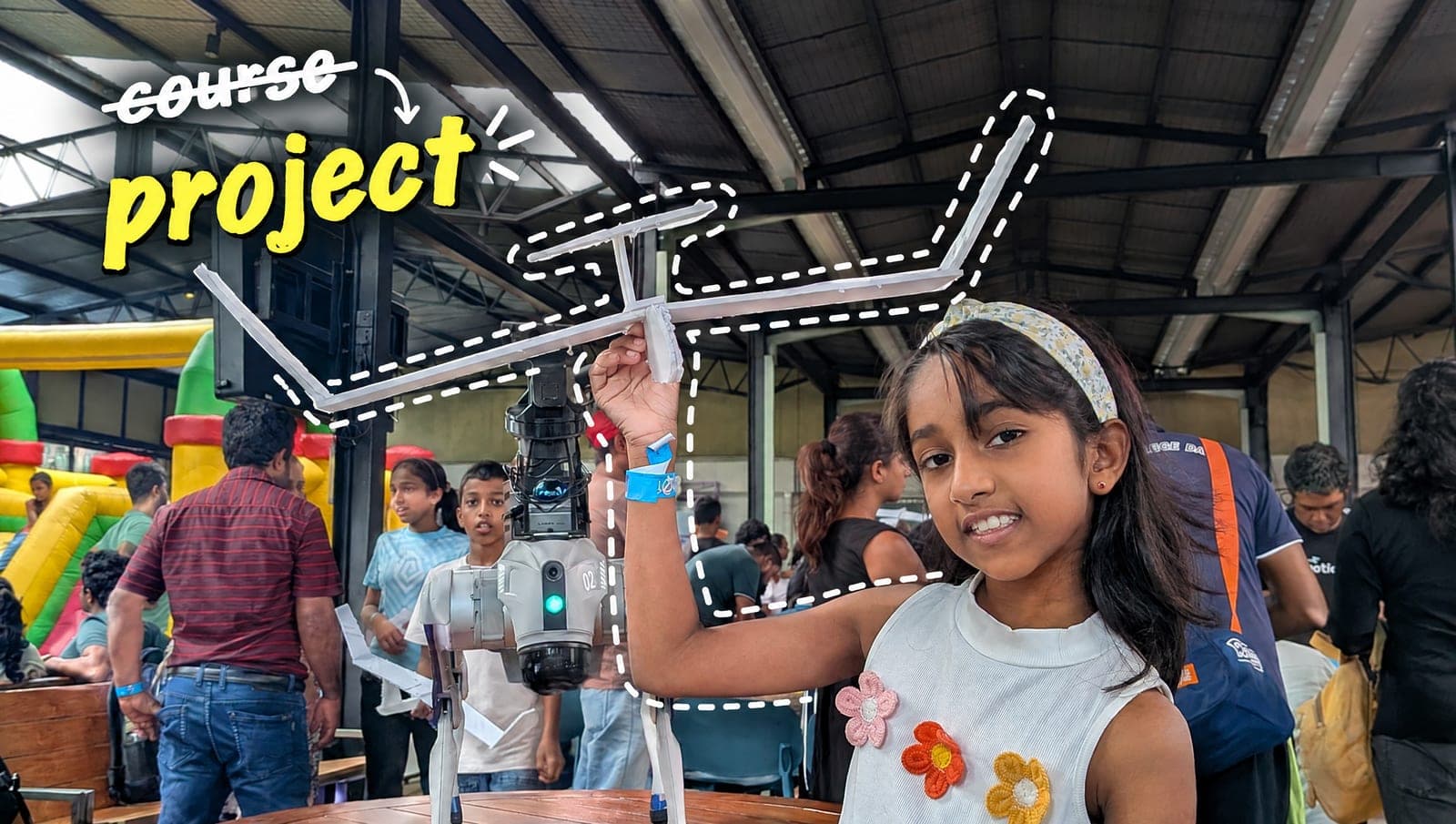
One robot, many skills: why robotics is such a good way for children to learn
A robot asks for engineering, coding, design, art, problem solving and teamwork at once. Why that makes robotics one of the best ways for children to learn.

Deepana Ishtaweera, Founder, RoboticGen
· 6 min read
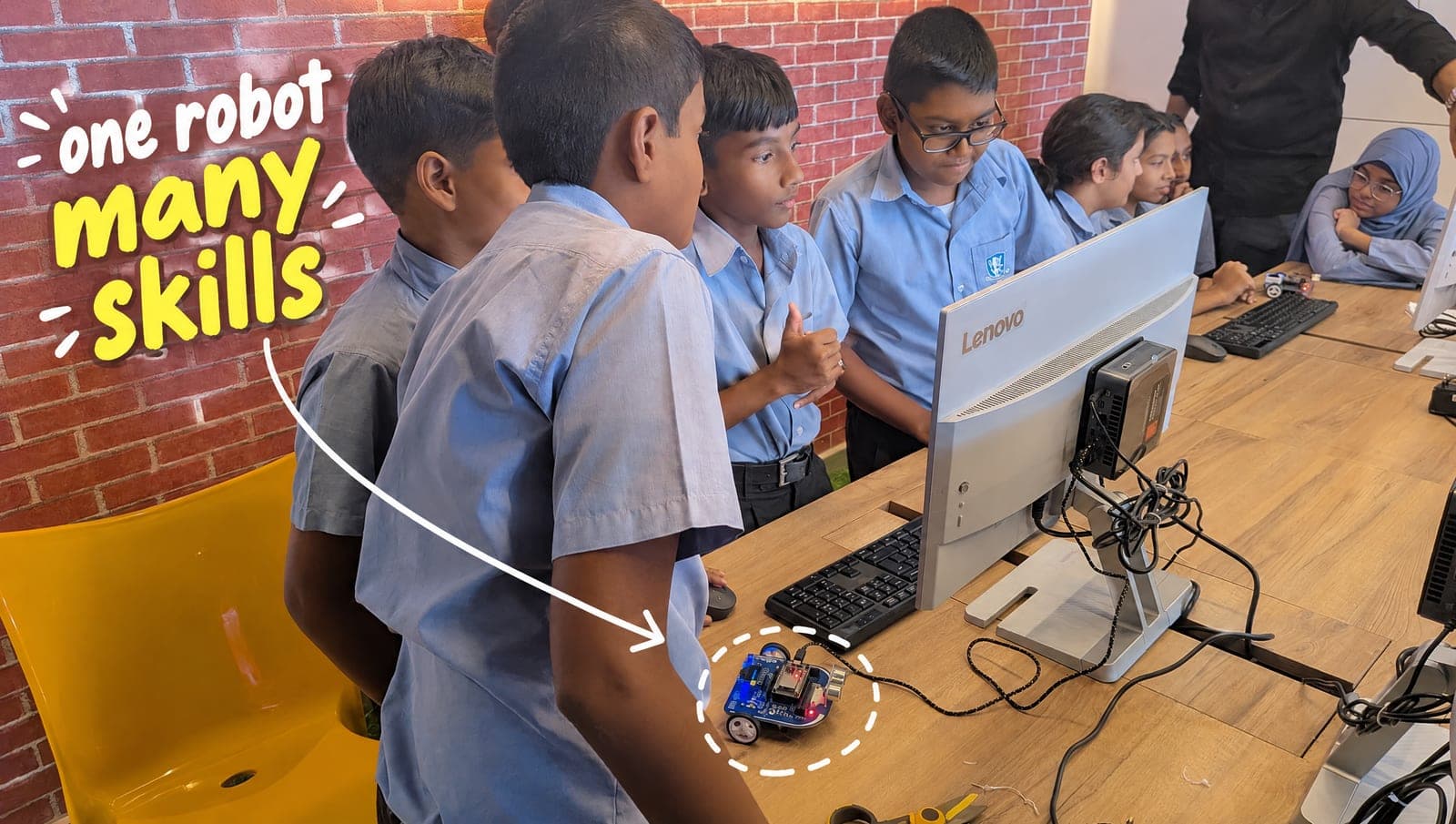
School hands children what they learn in separate boxes: maths in one period, science in the next, art in another. A robot doesn't come in boxes. To make one small robot cross a table, a child needs a little physics, a little code, some geometry, an eye for how it looks, the patience to fix it and the words to explain it.
That is the whole case for robotics in education. It isn't one more subject. It is one project that builds many skills at once: technical, creative and human.
Everything one robot asks of a child
Take a simple robot car that drives up to a wall and turns away. Look at what it asks for.
| When a child works on… | The skills they build |
|---|---|
| The motors, wheels and battery | Forces, friction and electricity: physics they can hold |
| The code | Logic, sequence, and cause and effect |
| The body | 3D design, measurement and geometry |
| The person who'll use it | Empathy, and what makes a thing easy to use |
| How it looks and sounds | Colour, shape, rhythm: the art in engineering |
| Why it crashed | Critical thinking: guess, test, adjust |
| Showing it to others | Teamwork, and explaining an idea clearly |
No single lesson builds all of that. One project does, and the child never has to be told how the skills connect. They can see it on the table.
Hardware: physics you can hold
A battery that runs flat, a wheel that slips, a motor too weak for the weight: these are physics lessons that arrive as problems to solve, not chapters to read. Even a cardboard robot teaches them. In one of our GenAlpha builds, children make a four-legged robot walk with nothing more than one motor and two AA batteries.
Build it on Oboverse· Robotics· 9 steps
Quadruped Robot
Dogs, cats and horses walk on four legs. Can a robot? Build a small cardboard robot with ice cream stick legs that walks by itself, powered by just one motor and two AA batteries.
Software: code with consequences
On a screen, a bug is a red line. On a robot, it is a car spinning in circles on the floor while everyone laughs. Code that moves something real gets immediate, honest feedback, and children learn fast that the robot does exactly what they told it, not what they meant. Our Snailbot build makes the point for beginners: first the paper snail crawls by hand, then a small ESP32 board and a servo give it "a brain and a muscle."
Design: building for someone
Engineering starts with a person, not a part. In our Easy Grip project, children design a handle for people with stiff or sore hands: they shape the grip in Play-Doh, measure it, model it in Onshape (the same 3D design software engineers use) and print it. The question shifts from "does it work?" to "does it work for them?", and that is where empathy and design thinking begin.
Build it on Oboverse· 3D Printing· 17 steps
Easy Grip
Some people have stiff or sore hands and find thin pens, spoons and toothbrushes hard to hold. Shape the perfect grip with Play-Doh, measure it, then design a fat handle with three finger grooves in Onshape and 3D print it.
Art: robots are made, not only engineered
Every robot has a look, a sound and a personality, and children care about all three. Choosing how a robot lights up, how it moves and what story it tells is creative work, and it is often what keeps a child going through the hard technical parts. Some of our builds start from art itself: the Fibonacci Gauge turns the number pattern in a sunflower's seed spirals into a measuring tool children make and hold.
Critical thinking: the robot is an honest teacher
You can't talk a robot into working. When it fails, the only way forward is to ask what happened, form a guess, change one thing and try again. That is the scientific method, practised dozens of times an hour. Seymour Papert, who pioneered children's programming at MIT, argued in Mindstorms (opens in a new tab) that "errors benefit us because they lead us to study what happened, to understand what went wrong, and, through understanding, to fix it." A child who fixes their own robot learns that being stuck is part of the work, not a sign they're bad at it.
What the research says
The evidence is encouraging, and honest about its limits.
- A 2021 review of 17 studies of school children found that learning with educational robots had a medium-sized positive effect (opens in a new tab) overall, with clear gains in computational thinking and stronger effects in primary school than in middle school.
- A 2024 review of 21 studies found moderate effects on students' learning and their attitudes (opens in a new tab) to science, technology, engineering and maths, but no significant effect on computational thinking, and results that varied by subject.
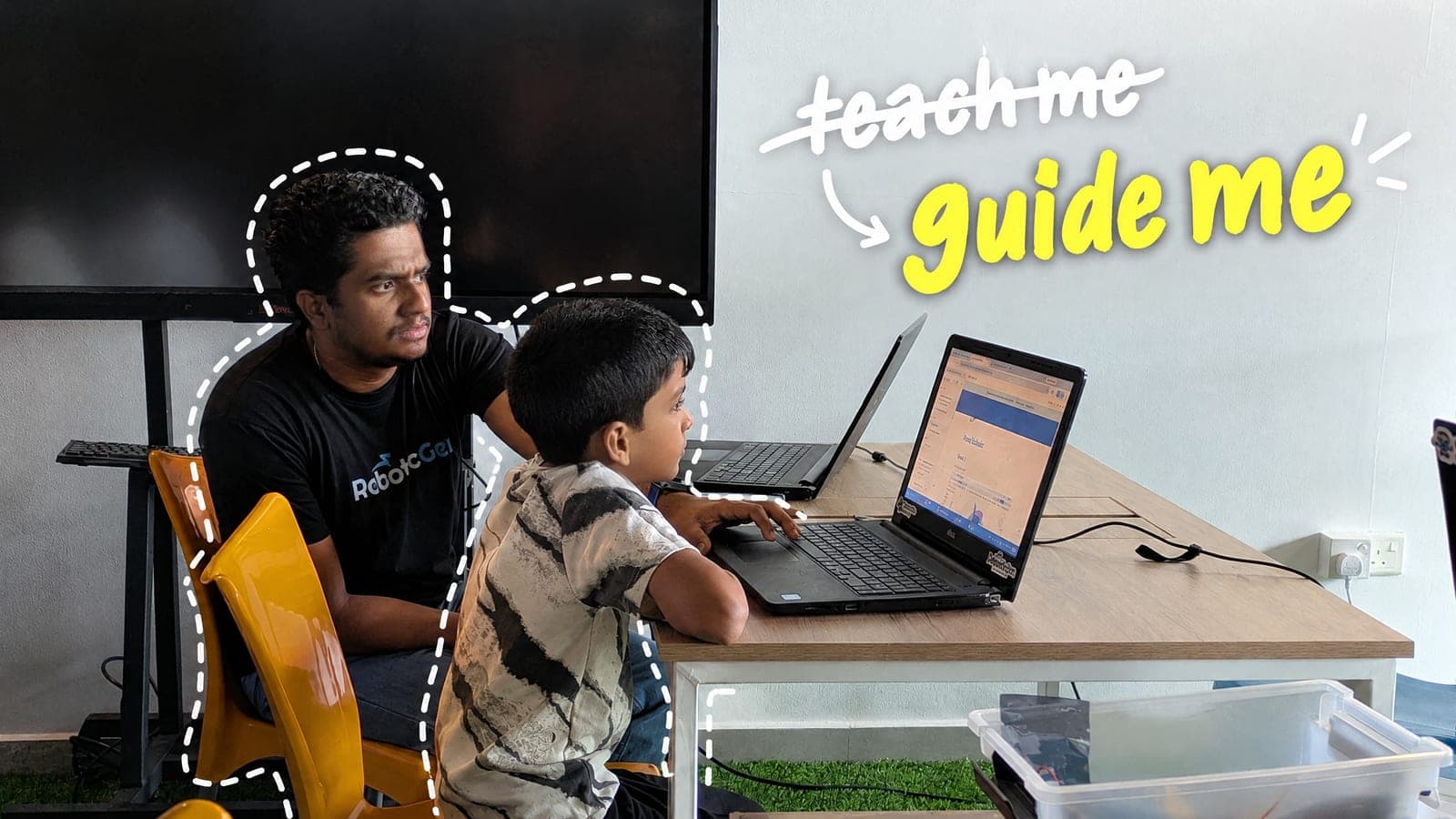
The difference between the two is the useful part. Robots don't teach by being in the room. What children do with them matters: whether they design and build, get stuck and work it out, and explain what they made, with an adult guiding rather than demonstrating. That is the approach we describe in why we chose mentors over teachers.
A tool that grows with your child
Robotics works across the whole of childhood because the same idea scales. A five-year-old can make a paper snail crawl. A ten-year-old adds sensors so a car finds its own way through a maze. A fifteen-year-old designs parts in 3D, lays out circuit boards and trains a camera to recognise objects with AI, using the tools professionals use.
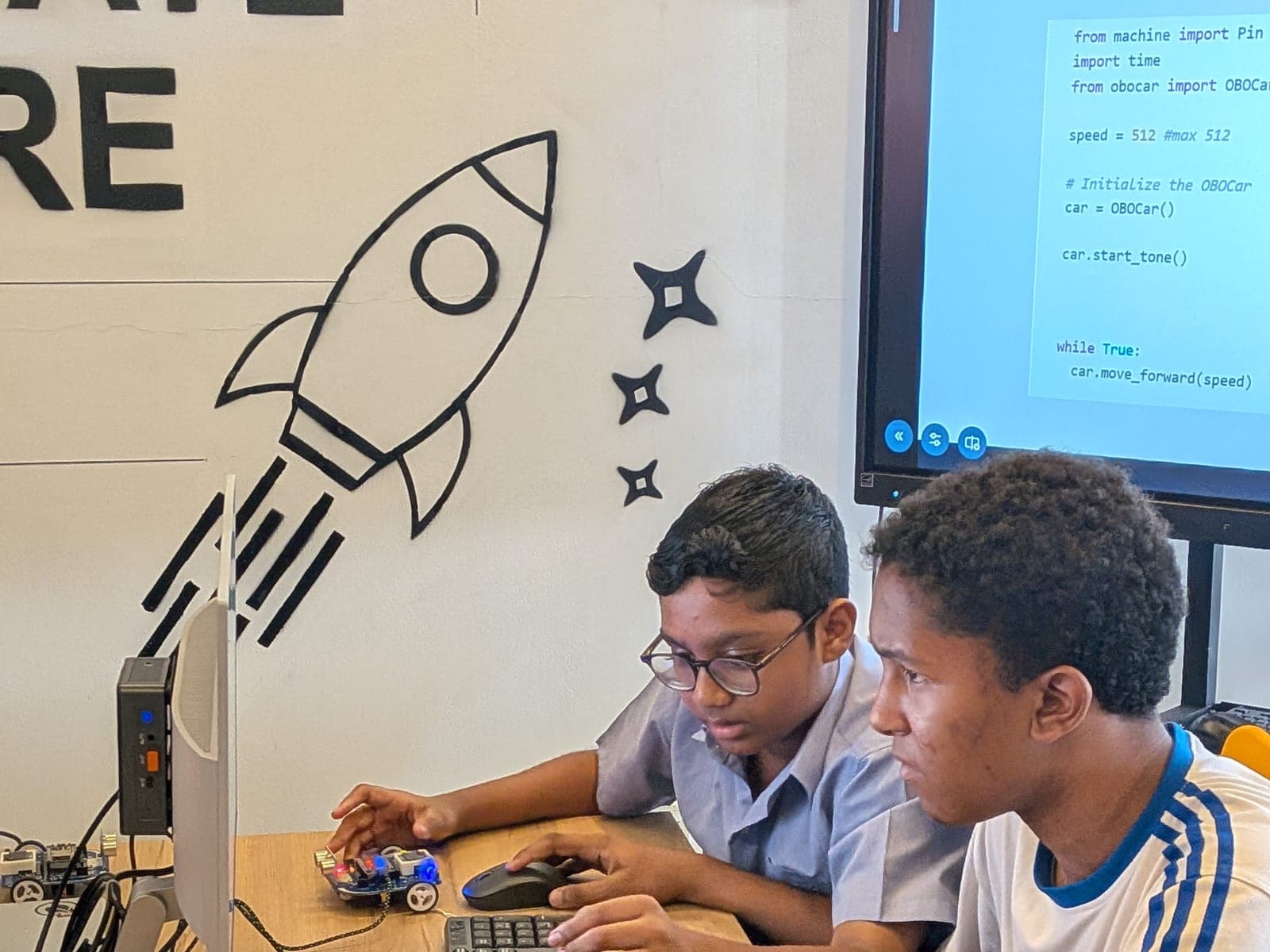
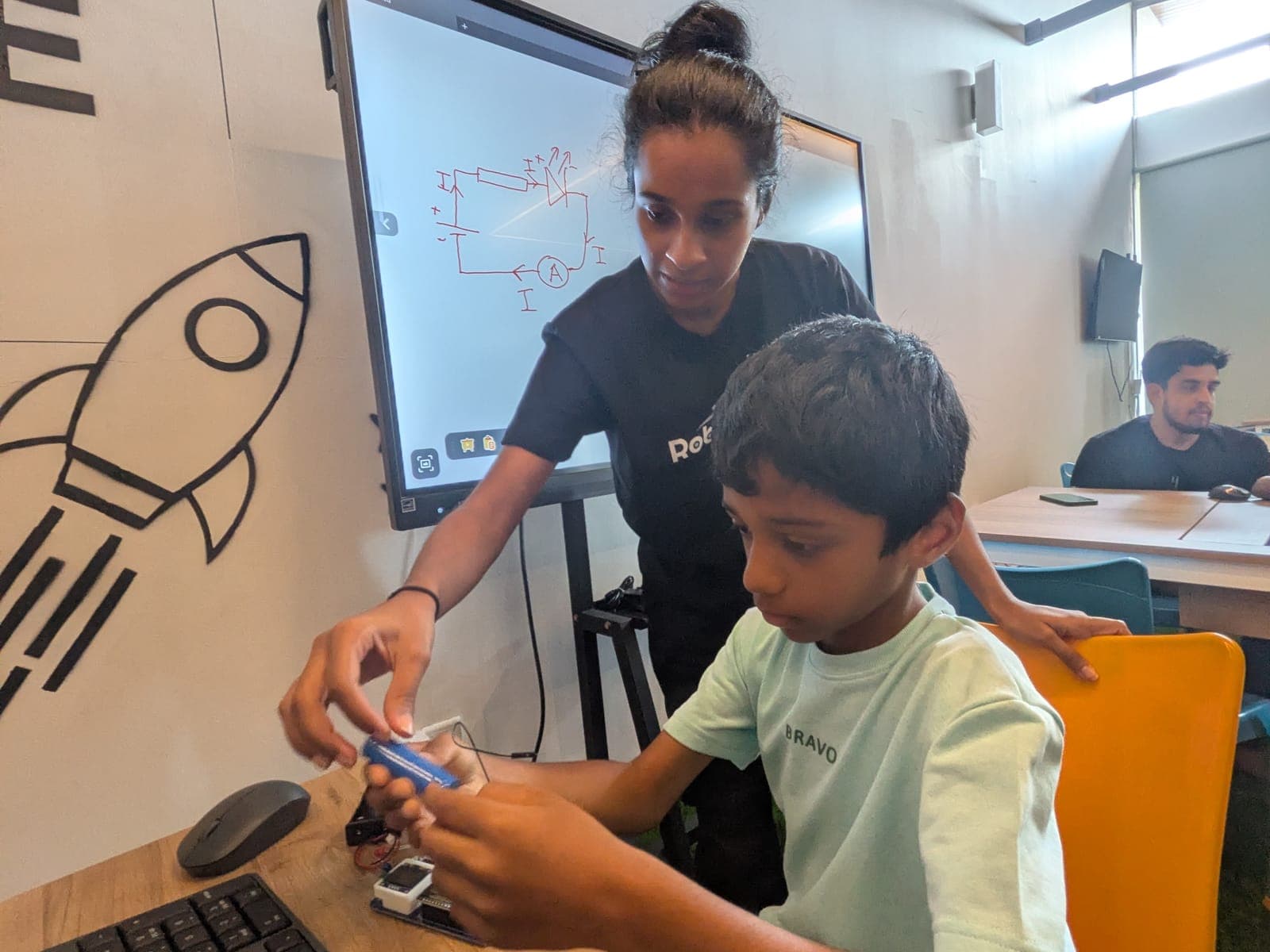
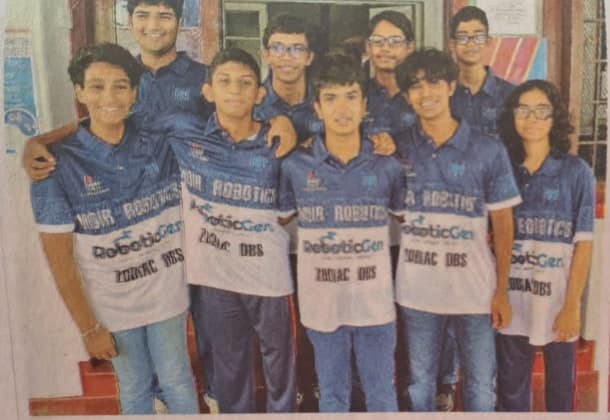
At RoboticGen Academy, children aged 5 to 16 learn this way: one project at a time, with a mentor every week, online or at our Makerspace in Dehiwala, and the chance to take their robots to competitions such as Coolest Projects Sri Lanka and the FIRST Tech Challenge.
Four questions to ask about anything your child builds
You don't need to know any robotics to help. Ask:
- How does it work? Explaining is the real test of understanding.
- What went wrong first? Every good build has a bug story. Listen for how they found it.
- Who is it for? This turns a gadget into a solution.
- What would you change next? Improving a working thing is where engineering really starts.
Many skills, one child
Children don't live their lives in subjects, and neither do the problems they'll solve as adults. A robot is a rare thing in education: a single object that asks a child to think like a scientist, an engineer, a designer and an artist at once, and then shows them, plainly, whether it worked. That is why we build them.